

ISIS Neutron and Muon Source Data Journal
This is a page describing data taken during an experiment at the ISIS Neutron and Muon Source. Information about the ISIS Neutron and Muon Source can be found at https://www.isis.stfc.ac.uk.
Effects of pore geometry of nanoporous carbons on hydrogen densification using INS
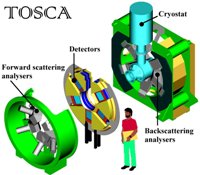
Abstract: Neutron scattering is one of the few experimental techniques that can directly determine the state of confined H2 molecules in microporous solids. Recent inelastic neutron scattering (INS) measurements confirmed the role of optimal pore dimension in compressing and densifying the adsorbed hydrogen. However, the effects of pore geometry on hydrogen densification of nanoporous materials are still unclear. This proposal is designed to correlate the pore geometries of a select range of carbon nanomaterials with the levels of hydrogen densification observed using neutron scattering, to determine the optimal pore geometries needed for higher-performing nanoporous carbon hydrogen storage materials.
Public release date: 20 April 2019
Principal Investigator: Professor Valeska Ting
Experimenter: Dr Nuno Bimbo
Experimenter: Professor Mi Tian
Experimenter: Professor Tim Mays
Experimenter: Miss Jemma Rowlandson
Experimenter: Dr Huan Doan
Local Contact: Dr Svemir Rudic
DOI: 10.5286/ISIS.E.79110307
Parent DOI: 10.5286/ISIS.E.RB1610401
ISIS Experiment Number: RB1610401
Part Number: 1

Date of Experiment: 13 April 2016
Publisher: STFC ISIS Neutron and Muon Source
Data format: RAW/Nexus
Select the data format above to find
out more about it.
Data Citation
The recommended format for citing this dataset in a research
publication is as:
[author], [date], [title], [publisher],
[doi]
For Example:
Professor Valeska Ting et al; (2016): Effects of pore geometry of nanoporous carbons on hydrogen densification using INS, STFC ISIS Neutron and Muon Source, https://doi.org/10.5286/ISIS.E.79110307
Data is released under the CC-BY-4.0 license.